
I understand why soft foam frisbees appeal to adults.
They look safer. They feel safer. They make adults feel like they are reducing risk and making frisbee more appropriate for younger children. On the surface, that sounds responsible. But I think this is one of those places where adult comfort can get in the way of good teaching, good play, and good development.
I do not think we should adapt the frisbee to force an activity to fit the child. I think we should adapt the game to fit the child, while still giving them a good frisbee that actually flies the way a frisbee is supposed to fly. That difference matters.
The Problem Is Usually Not the Frisbee
When adults reach for soft foam frisbees, the assumption is often that the frisbee itself is the problem. Young kids might get hit, so let’s make the object softer. But most of the time, the real issue is not the disc. The real issue is that adults are trying to put children into games, drills, or situations they are not developmentally ready for, and instead of changing the activity, they change the equipment. That might make adults feel better, but it often gives kids a worse first experience.
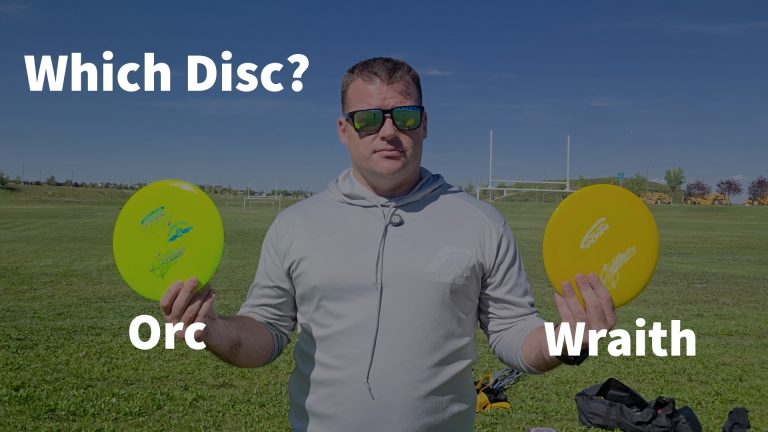
A good frisbee is fun because it flies. It glides. It spins. It responds to touch, angle, and release. That is what makes frisbee interesting in the first place. A soft foam frisbee usually does not do that very well. It flops, dies, and gives kids a watered-down version of the real thing. If we want kids to learn how to throw, then we should give them something worth throwing.
A Worse Frisbee Teaches Worse
One of the best things about a real frisbee is that it gives honest feedback. If a child releases it poorly, they can see that. If they throw it with control and good spin, they can see that too. The disc teaches. It rewards attention, patience, and improvement. That is a big part of how confidence is built.
Confidence does not come only from adults saying, “Good job.” Confidence comes from feeling a disc leave your hand properly and watching it actually fly. That is the moment that makes a kid want to do it again.
When the disc does not fly well, the learning gets distorted. The child is not really discovering what a frisbee can do. They are just managing a piece of equipment that does not behave very well.
Small Risks Matter
This is where I think the conversation gets bigger than foam frisbees.
A lot of what adults are trying to remove is not serious danger. It is small, manageable risk. And that matters, because Mariana Brussoni’s work on risky play has found that opportunities for children to engage with risk are linked to benefits like increased play time, social interaction, creativity, and resilience. She has also described risky play as helping children strengthen physical skills, build critical thinking, overcome fears, and cope more independently with difficult situations.
That idea fits this conversation perfectly. Kids do not need every small consequence engineered out of play. They need good boundaries, good supervision, and room to learn.
I do not think the issue is that a child might get hit by a frisbee once in a while. I think the bigger issue is adults trying to remove every bump, every mistake, and every uncomfortable lesson before the child has had the chance to learn from it.
Kids Need Consequences, Not Constant Cushioning
Kids need to discover that if they throw when someone is not looking, that is a problem. If they throw wildly, the game breaks down. If they make a bad throw, they should have to go get it. That is not harsh. That is learning.
In fact, one of the simplest and best rules is this: if you make a bad throw, go get it yourself. That rule alone changes behaviour fast. Kids start realizing that control matters. They become more aware of the other person. They stop treating the frisbee like something they can launch without thought.
Those are good lessons. They build self-control, responsibility, and respect for others. A softer frisbee does not teach those things nearly as well as a better progression and clearer boundaries do.
The Better Answer Is to Adapt the Game
If a group of young kids cannot safely and successfully play a certain game with a real frisbee, I do not think the answer is automatically to use a softer frisbee. I think the better question is whether the game is appropriate in the first place.
That is where I think too many people get this wrong. They use “safer” frisbees so young kids can play games that are still not developmentally appropriate, instead of stepping back and changing the game itself. Adapt the game to the child, not the frisbee to the adult’s fear.
Use rolling games. Spinning games. Flipping games. Target challenges. Short, controlled partner activities. Clear throwing rules. Plenty of space. Simple boundaries. Give kids a real disc and a better entry point. That creates real learning and real fun.
I’ve Seen This Over and Over
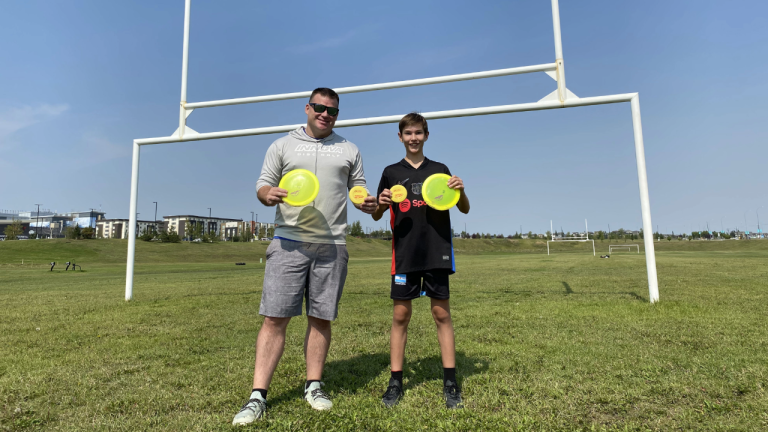
This is not just a theory I have from the sidelines. On your site, you say you have worked with more than 250,000 students through 8,000-plus PE workshops, with kids from kindergarten through Grade 12, all while teaching with real frisbees that actually fly. Your site also frames frisbee as a multi-discipline sport, more like track and field than a single narrow game.
That matters because it shows this is not some untested opinion. It has been proven over and over in real gyms with real kids. The answer is not worse equipment. The answer is better teaching, better progressions, and better games.
We Need Less Adult Fear and More Trust in Learning
I think a lot of youth sport decisions are driven more by adult fear than by child development. Adults worry about what might happen, so they try to remove every possible risk. But kids learn through trial and error. They learn through manageable consequences. They learn through adjusting.
That does not mean throwing safety out the window. It means not confusing safety with overprotection.
A real frisbee, used in an appropriate game with clear boundaries, is not reckless. In my view, it is often the better teaching tool. It is more honest, more fun, and more likely to help a child discover what is actually possible with frisbee.
Let Kids Experience the Real Thing
I do not believe in making frisbee worse so adults can feel better about introducing it.
I believe in giving kids a good frisbee and a developmentally appropriate way to use it. I believe in allowing small risks, clear consequences, and real learning. And I believe that if we want kids to enjoy frisbee, gain confidence, and understand what makes it special, then they need to experience a frisbee that actually flies.
Because if we keep handing kids “safer” frisbees that do not fly properly, we may not be making frisbee safer at all.
We may just be making it worse.